Health Risk Assessments: The Baby and the Bath Water

When considering your health risk appraisal, be cautious before throwing out the baby with the bath water.The ShapeUp employer survey found that employers are increasingly skeptical about health risk assessments. An evocative infographic summarizing the survey results shows that, if employers’ wellness budgets were cut in half, HRAs would be programs they’d be most likely to cut. Three times as many respondents would eliminate their HRAs, for example, compared to those that would eliminate health coaching. Approximately 50% of respondents “do not believe in HRA.”

But some of the survey respondents’ comments — as well as much of the employee wellness literature — reveals that employers Continue reading

Are Health Risk Assessments Effective?

Are health risk assessments effective? Three systematic reviews have sought to answer this question.

Technology Assessment: HRA

Technology Assessment: HRA (click to access the pdf)

One of the most rigorous and most recent analyses, Health Risk Assessment: Technology Report, conducted by McMaster University Evidence-based Practice Center for Agency for the Healthcare Research and Quality, examined 118 studies of health outcomes associated with HRAs. The report concluded:

Many HRA programs demonstrated improvements on intermediate health outcomes such as blood pressure, cholesterol, physical activity, or fat intake. However, only one article considered Continue reading

How Valid Is A Cholesterol Measurement?

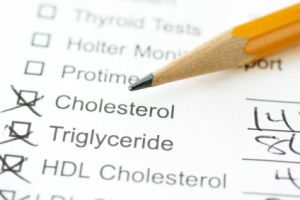
Worksite biometric screening results for cholesterol, triglycerides, and HDLAs the saying goes: Garbage in, garbage out. The validity of a health risk appraisal inevitably is limited by the validity of the data entered into it — which includes mostly self-reported data but also, sometimes, biometric data uploaded via the back-end. A lot of people malign self-reported data and revere biometric lab values. But self-reported data may be more valid than we think. And, using one example of a biometric, we’ve seen that blood pressure screening results may not Continue reading

How Valid is Self-Reported Health Risk Appraisal Data?

One of the most common knocks on health risk appraisals is that, by definition, they rely on self-reported data. Critics assume self-reported data biased and inaccurate. In fact, one of the respondents in the Shape Up employer wellness survey was quoted as saying, “Biometric screening is a prerequisite for any program. …Self-reported is pointless.” So the real question is not just whether self-reported data is valid, but how it compares to other sources of data, such as biometric screenings (and medical claims data, too), generally perceived to be the gold standard.

The true validity of self reported data is murky. Most of the research on self-reported data validity is Continue reading

What Is an HRA (Supposed to Be)?

At some point in every health educator’s life, someone, frustrated by the fact that none of the seemingly endless choices of health risk appraisals on the market are the perfect fit for your organization, will suggest, ”Why don’t we develop our own HRA?” When you hear this, run the other way.

Unless your organization has expertise in epidemiology, has a readily available source of frequently updated mortality databases that include diverse populations, and has a high level of expertise in questionnaire design, preventive health, chronic disease, health communications, medical cost prediction, productivity measurement, and health behavior theory, it has little chance of being able to Continue reading

The (Theoretical?) Framework of Employee Wellness

How is employee wellness supposed to work?

We still haven’t wrapped up our commentary on the Shape Up employer wellness survey. Things got stuck when it came to understanding the opinions employers expressed about health risk appraisals. In order to understand their opinions of HRA’s we need to know their expectations of HRA’s. And, to do that, it’s important to appreciate how health risk fits Continue reading

Sorting Out the Genetic Information Nondiscrimination Act (sort of)

Recently, tEWN member Don Powell kindly posted an update on Title II of the Genetic Information Nondiscrimination Act (GINA) and the impact it may have on health risk assessments. You can read his summary here.

In response, CoHealth co-founder and lower-case enthusiast Fran Melmed posted a clarifying question: “my understanding is that in the final regulations employers are no longer barred from providing incentives for HRA completion that asks about genetic information. is that correct?” - f

I’ll go out on a limb and take a shot at Continue reading